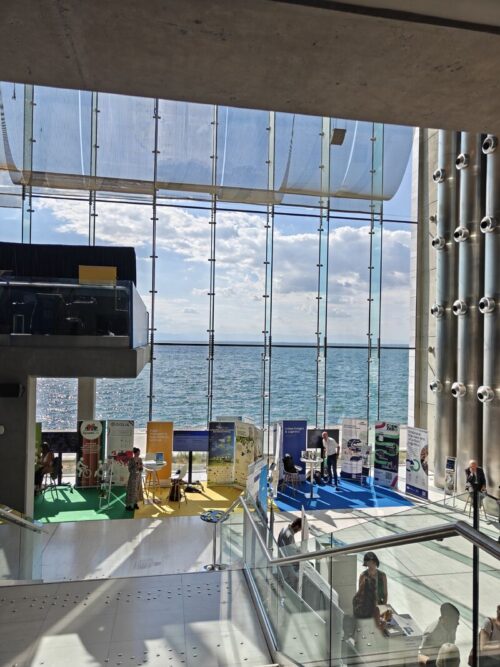
September brought an important moment for BIO INTEL MOB, with partners coming together in Thessaloniki for the its General Assembly, following three days of exchange with the wider European urban mobility community at CIVITAS Forum 2026.
The CIVITAS Forum took place from 15 to 17 September in Thessaloniki under the theme “Roots & Routes: Moving Forward to Competitive, Connected and Resilient Urban Mobility”. The event brought together cities, policymakers, researchers, practitioners and mobility stakeholders to exchange experiences and discuss the future of urban mobility.
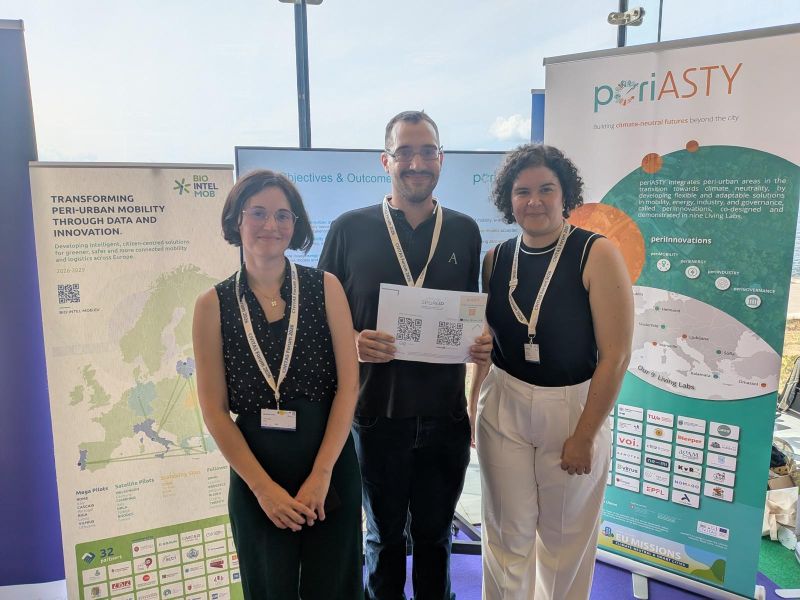
For BIO INTEL MOB, the Forum was also an opportunity to connect the project’s work with other European initiatives working on related mobility challenges. Partners took part in sister project meetings and the Integrated Peri Urban Areas Cluster, alongside projects including ALTHEA, SpurUp and periASTY. These exchanges provided an opportunity to discuss common challenges, compare approaches and explore possible links between projects working on mobility beyond the urban core.
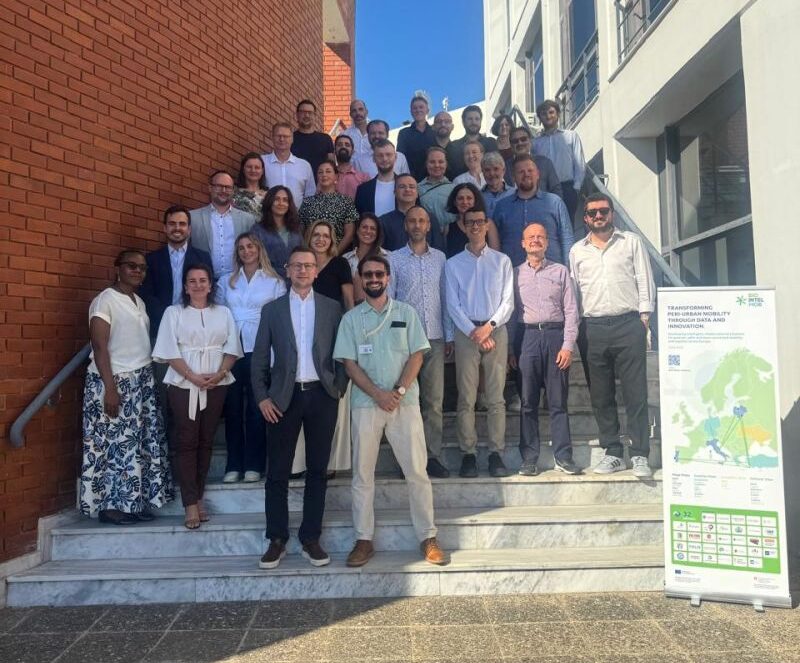
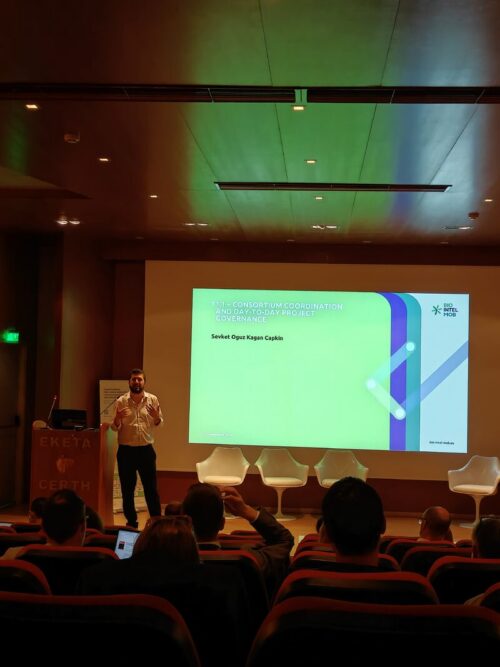
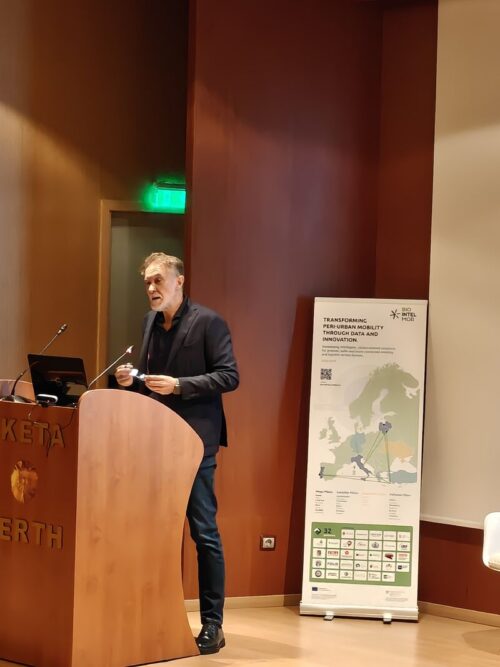
The Forum was followed directly by the first BIO INTEL MOB General Assembly, held in Thessaloniki on 17 and 18 September. 32 partners from 13 countries came together to review the work completed during the first months of the project, discuss progress across the different work packages and agree on the next steps. The meeting was hosted in Thessaloniki, with project partner CERTH playing an important role in bringing the project partners together.
From project foundations to pilot preparation
The General Assembly came at an important point in the project. During the meeting, partners were not only reviewing the work carried out so far, but also looking at how the different parts of BIO INTEL MOB will connect as the project moves towards implementation.
One of the clearest areas of progress discussed in Thessaloniki was the preparation of the pilot sites. For the pilots, the current phase is about making sure that the conditions for implementation are in place. Work Package 4 is developing a common readiness approach covering infrastructure, data availability, system integration and governance requirements. The partners are also assessing potential PUMH locations, mobility demand, logistics flows and technical, spatial and regulatory constraints.
This work is already producing concrete results. In Rome, for example, five potential PUMH locations are being verified. Cascais has assessed 16 locations and shortlisted five, which will be narrowed down to three. Riga has identified five mobility corridors and proposed potential PUMH locations along them, while Vilnius is assessing five candidate sites. The Satellite Pilots are also progressing with their own location and readiness assessments.
Building the basis for measuring impact
The General Assembly also provided an opportunity to look ahead to how the project’s results will be assessed.
Work Package 5 is developing the impact assessment and validation framework that will be used to evaluate the environmental, social, economic and operational effects of the BIO INTEL MOB solutions. The work includes the development of a KPI based assessment system, baseline data, impact indicators and a three index assessment covering sustainability, innovation maturity and transferability.
At the time of the General Assembly, the first phase of this work had already established the main impact dimensions and initial KPI domains for the project solutions, including PUMHs, GSRA, bioPLU, GSVRP, aMDS and SCGo. The next steps include KPI prioritisation, validation, monitoring and integration with the project data repository.
Later in the project, the evaluation will also connect evidence from the real world pilot sites with Digital Twin simulations, helping the project compare and validate system performance.
Looking towards scalability and transferability
The discussions in Thessaloniki also looked beyond the immediate pilot deployments. Work Package 6 is preparing the ground for assessing the maturity, scalability and transferability of the BIO INTEL MOB solutions.
This work will draw on information from the research, digital, pilot and impact assessment activities. Partners are beginning to organise information on each solution, including its technical approach, pilot application, current maturity and available evidence. The work will also contribute to future standardisation activities, policy recommendations and the project’s knowledge sharing activities. This is particularly important for a project working across such different locations and contexts. The experience gained in Rome, Cascais, Riga, Vilnius and the Satellite and Follower Sites will provide the evidence needed to understand not only whether the solutions work, but also where and under which conditions they can be applied elsewhere.
Connecting with the wider mobility community
The timing of the General Assembly also made the week in Thessaloniki particularly valuable for BIO INTEL MOB. Before sitting down together as a project consortium, partners were already engaging with the wider CIVITAS community and with projects working on related topics.
The Integrated Peri Urban Areas Cluster brought together projects addressing mobility challenges beyond the urban core, providing a space for BIO INTEL MOB and its sister projects to exchange experiences and identify areas for cooperation.
The Forum itself also reflected many of the themes that run through BIO INTEL MOB, including connected mobility, multimodality, mobility hubs, data driven transport planning, urban logistics and the need to respond to different local contexts. Thessaloniki provided a particularly relevant setting, as the city is developing its own mobility transformation, including multimodality, shared mobility, mobility hubs, ITS and MaaS.
A busy week for BIO INTEL MOB
From the CIVITAS Forum to the General Assembly, the week in Thessaloniki brought together two important sides of the project’s work: connecting with the wider mobility community and working closely as a consortium to prepare the next stages of BIO INTEL MOB.
After the first months of project implementation, the partners now have a clearer view of the work ahead. Pilot locations are being assessed, technical and data requirements are being developed, impact indicators are being structured and the foundations for scalability and transferability are being prepared.
The next phase will bring these strands increasingly closer together as the project moves from preparation towards the deployment and testing of its mobility and logistics solutions across Europe